The restoration of the Japanese Carrier carriage
Currently the Japanese lacquerwork sedan carriage from the collection of Castle de Haar resides in the restoration studio of Carolien van Es lacquerwork restorer and Jan Snoek paper restorer. The sedan coach has been dismantled and is in parts in the studio.
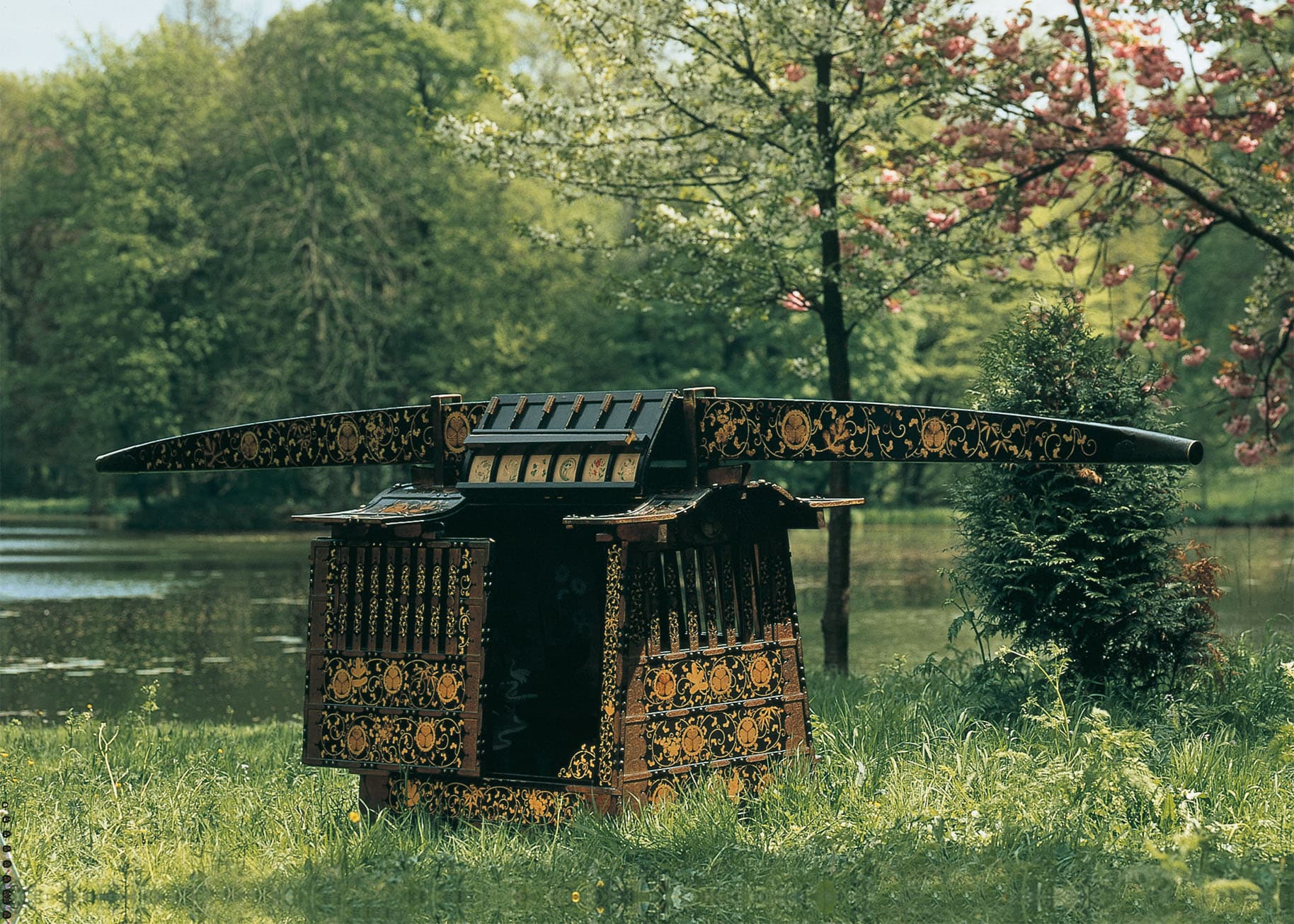
In such a sedan coach, also called norimono, courtiers were transported. The sliding doors were opened so that the passenger could take his or her seat, sit on his or her knees, the hatches were closed again and 2 to 4 bearers carried the carriage, on foot, to the destination.
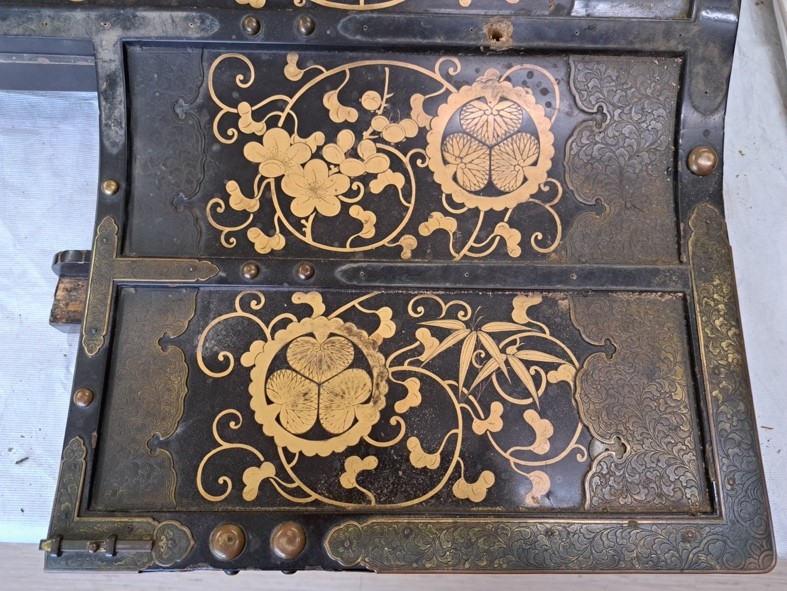
Our litter shows the family crest of the Shogun family Tokugawa (a stylized leaf of the man's ear) and probably belonged to a female member of this family. It reportedly dates from the 18th century.
Restoration
The carrier carriage is constructed so that it can be completely disassembled as a "kit". In this way, all parts can be cleaned properly and it is possible to place the various parts in various positions.
The carrying carriage has hundreds of decorative elements made of metal. These metal fittings were removed. During removal, it was found that under and around the metal hardware was an accumulation of dirt and old furniture wax.
The interior of the carriage was decorated with painted paper. The backrest and armrests were covered with fine silk. The beautiful paintings of birds and flowers on paper are still in good condition. However, here and there were tears in the paper. This has already been repaired and doubled. The silk parts are awaiting treatment.
The paint surface has been dry cleaned. All dust, overlying dirt and accumulations around metal fittings were removed. Wet cleaning with solvents was also done on several smaller areas. The roof of the carrier coach was very dirty and showed bitten-out "dots," probably bat pee. The disturbing stains are much less visible and the roof has regained its rich appearance.
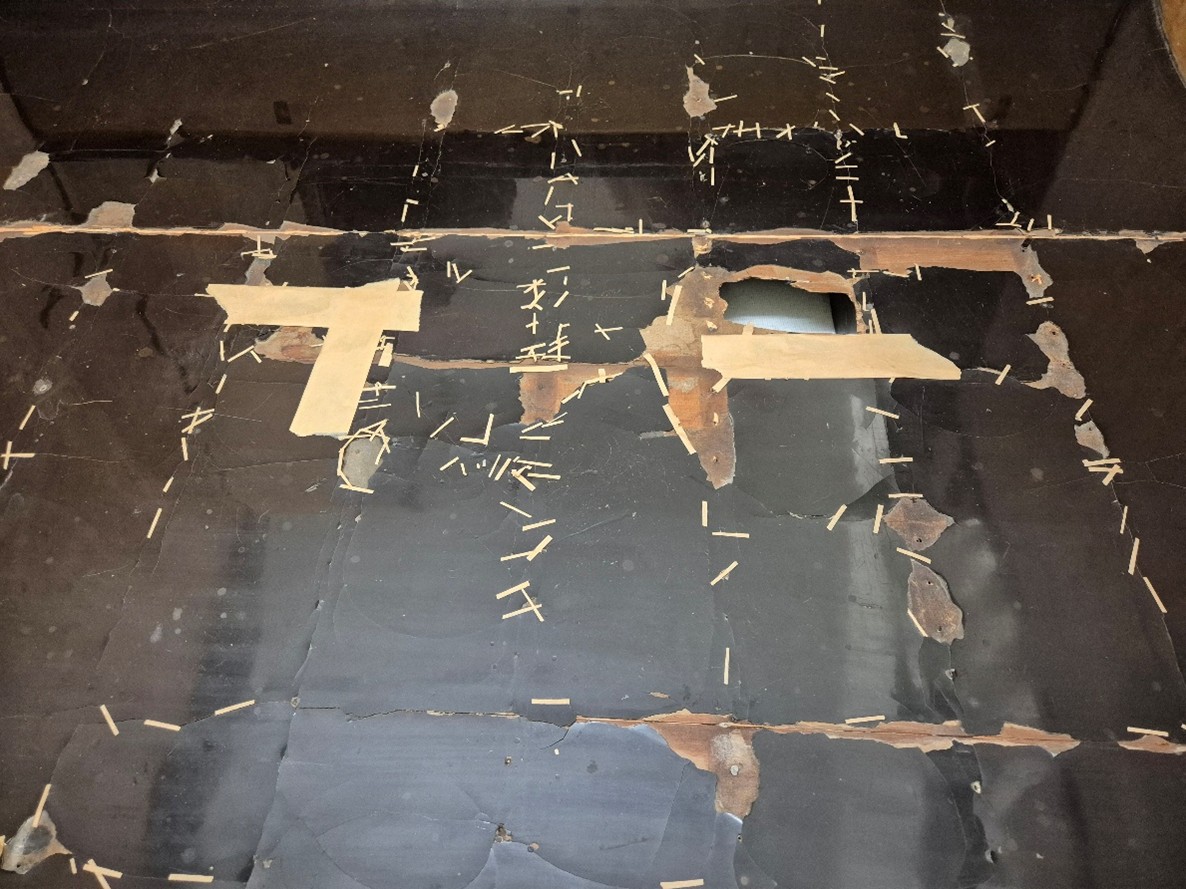
A major problem with the carrier body is the loose layers of lacquer on the carrier, causing many cracks to be visible on the surface. It is ingenious and complex work to fix the loose lacquer layers without causing more damage.
But there are also holes in the bottom of the carrying carriage and cracks and tears in wood joint or wood panel. This stage is currently being carried out on several small parts.
Restorers
Caroline van Es Lacquerware conservator
Jan Snoek, restorer oriental art on paper and silk
Guidance committee
Drs. Katrien Timmers, conservator Kasteel de Haar
Ma. Joyce van Loon, collection management Kasteel de Haar
Anetta de Jong, director Kasteel de Haar
Prof. Reinier Baarsen, curator furniture Rijksmuseum
Dr. Paul Rem, senior conservator Paleis het Loo
Drs. Steven Coene, head of collections and presentation Royal Collections, DKH
The sedan coach in the gardens of Kasteel de Haar

Othon van den Bogaerde, Baron Hélin, Baron Etienne and Baroness Hélène van Zuylen pose with the acquisition, 1911
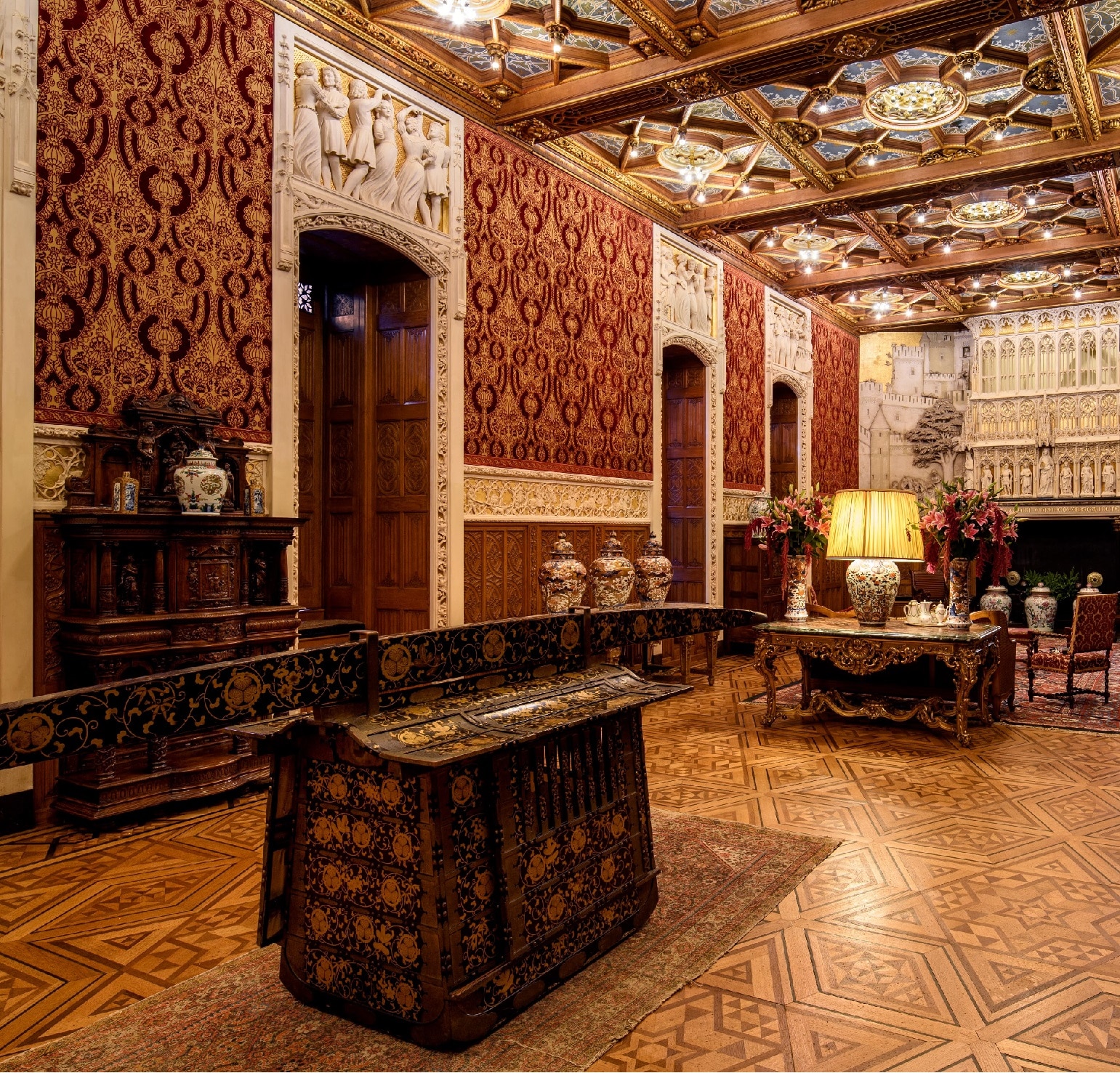
The sedan coach was given a place of honor in the ballroom when the baron came to stay in September
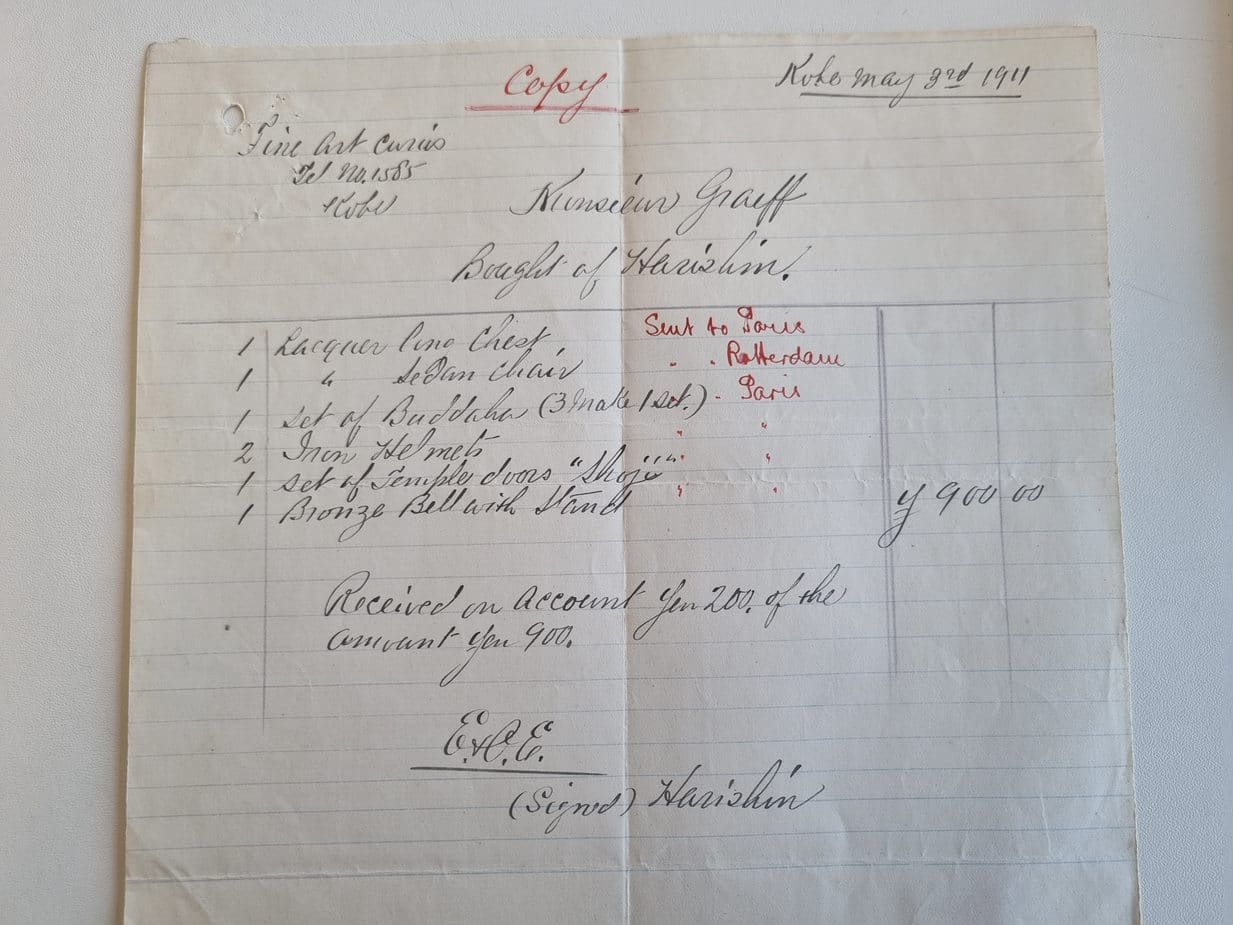
Transportation letter of the Sedan Chair and other objects from Kobe, Japan in 1911
The renovation
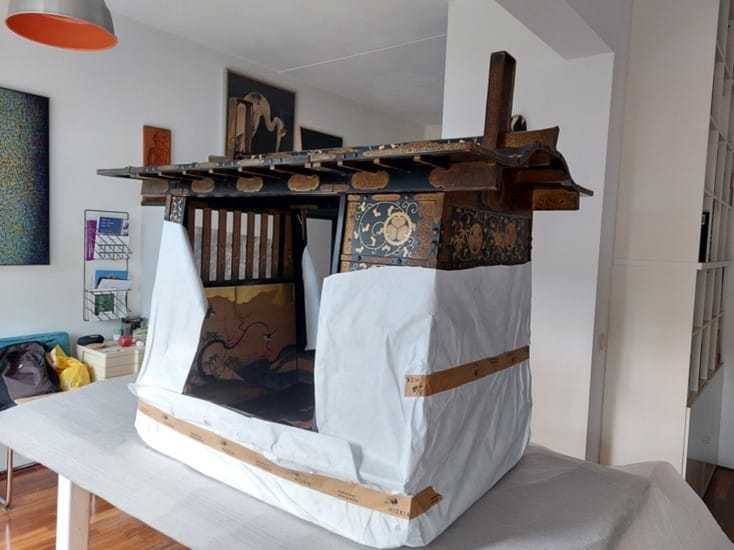
The sedan coach at
arrival at the workshop
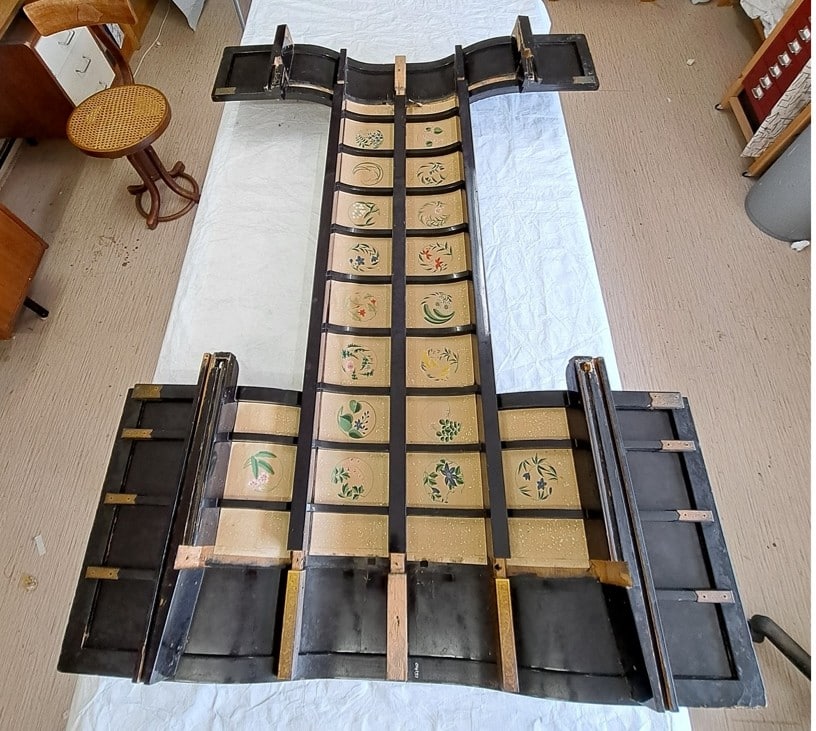
The whole
is demountable
The carriage
as a kit
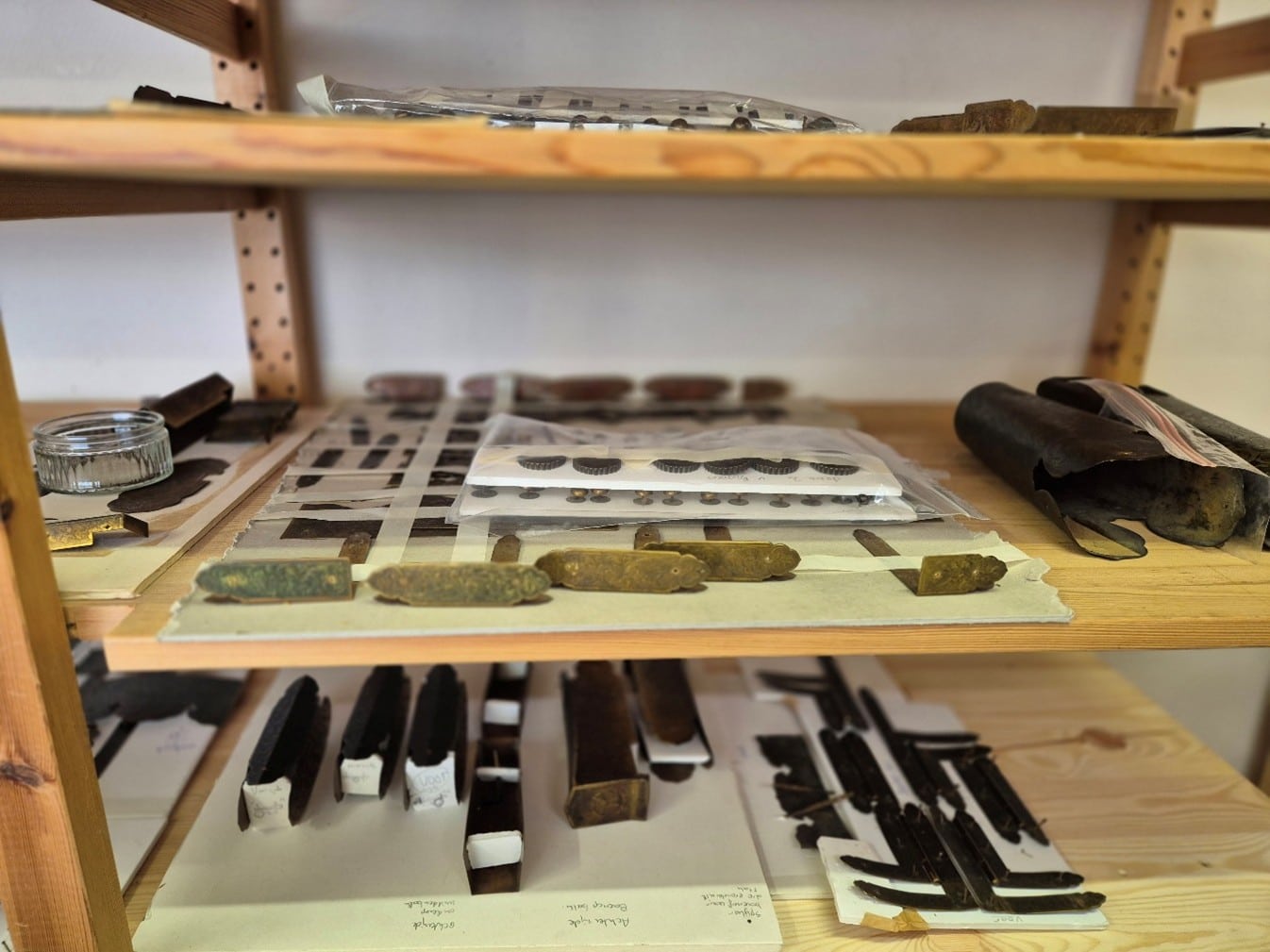
Hundreds
parts
Inventory of
damage to the floor

Visible dirt after
decrease parts with metal fittings